



Working principle schematic diagram and function of pneumatic solenoid valve
Pneumatic solenoid valve is one of the solenoid valves. Many friends do not know its principle when using it. Today, I will give you a detailed introduction to the working principle and schematic diagram of the pneumatic solenoid valve, as well as the function of the pneumatic solenoid valve.
Pneumatic solenoid valve
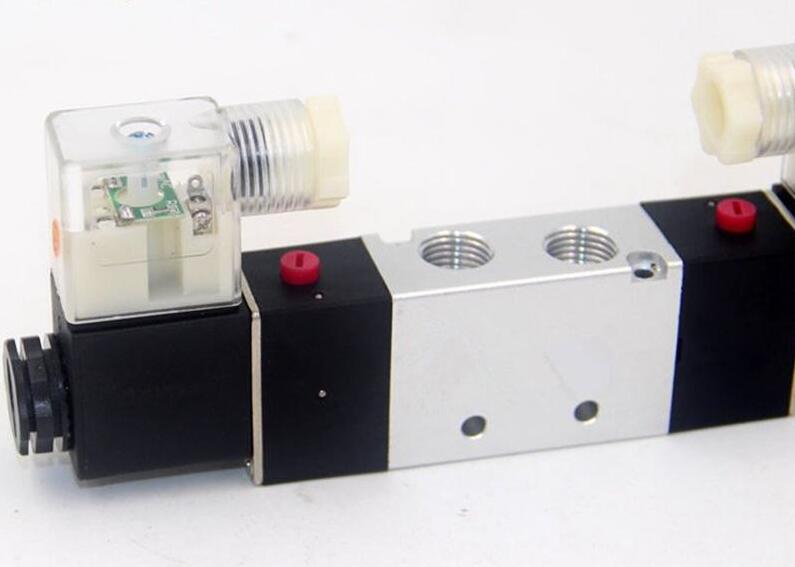
Solenoid valve is an industrial equipment controlled by electromagnetism. It is an automatic basic element used to control fluid. It belongs to actuator, and pneumatic solenoid valve is one of them. It controls the movement of the valve body to block or leak out different oil drain holes. The oil inlet hole is normally open. Hydraulic oil will enter different oil drain pipes, and then the piston of the oil cylinder will be pushed by the pressure of the oil in the pneumatic solenoid valve, In this way, the mechanical movement of the whole solenoid valve is controlled by controlling the current of the electromagnet of the pneumatic solenoid valve.
Working principle of pneumatic solenoid valve
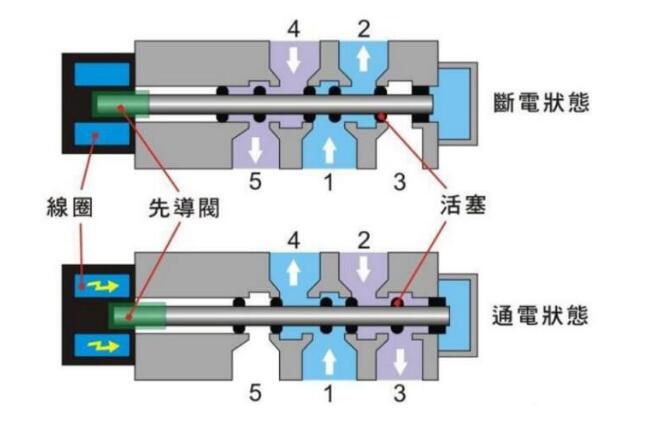
There are closed cavities in the pneumatic solenoid valve, and through holes are opened at different positions. Each hole of the pneumatic solenoid valve leads to different oil pipes. In the middle of the cavity is the valve, and there are two electromagnets on both sides. The magnetic coil on which side energizes the valve body will be attracted to which side; The pneumatic solenoid valve blocks or leaks different oil drain holes by controlling the movement of the valve body, while the oil inlet hole is normally open, and the hydraulic oil will enter different oil drain pipes, and then the piston of the oil cylinder will be pushed by the pressure of the oil in the pneumatic solenoid valve, so the mechanical movement of the entire solenoid valve will be controlled by controlling the current of the solenoid valve.
The working position of the pneumatic solenoid valve (that is, the opening or closing of the solenoid valve) is the position of the valve core of the pneumatic solenoid valve. The electrical conversion module converts the electrical signal into the pneumatic signal, and then the electrical signal input controls the pneumatic output. The solenoid valve executes the release, change or stop of air flow according to the command. Among the solenoid valves, the solenoid control reversing valve is the most important part.
The main working principle of the pneumatic solenoid valve is to use the electromagnetic force generated in the solenoid coil to push the valve core switch to achieve the purpose of air flow reversing. That is, in the pneumatic circuit, the solenoid valve controls the reversing valve, which is used to control the airflow passage to pass through, cut off or change the flow direction of compressed air. Direct acting solenoid valve and pilot solenoid valve are divided according to the push and change mode of the reversing valve in the control part of the solenoid valve. The direct-acting solenoid valve can directly use the electromagnetic force to push the reversing of the valve core, while the pilot solenoid valve uses the pilot air pressure output by the electromagnetic pilot to push the reversing of the valve core.
Function of pneumatic solenoid valve
There are two main functions of pneumatic solenoid valve: one is to muffle the noise, or the sound is too loud when the solenoid valve is exhausted, especially when there are many solenoid valves; Second, it can prevent dust and other fine particles in the environment from entering the solenoid valve, which may cause the movement of the solenoid valve core to be blocked, thus reducing the service life of the solenoid valve.
Pneumatic solenoid valve wiring:
The two phases can be directly connected, and the three phases only need to be connected with the zero line and the live line.
The solenoid valve is used to control the direction of hydraulic flow. The mechanical devices in the factory are generally controlled by hydraulic cylinders, so the solenoid valve will be used.